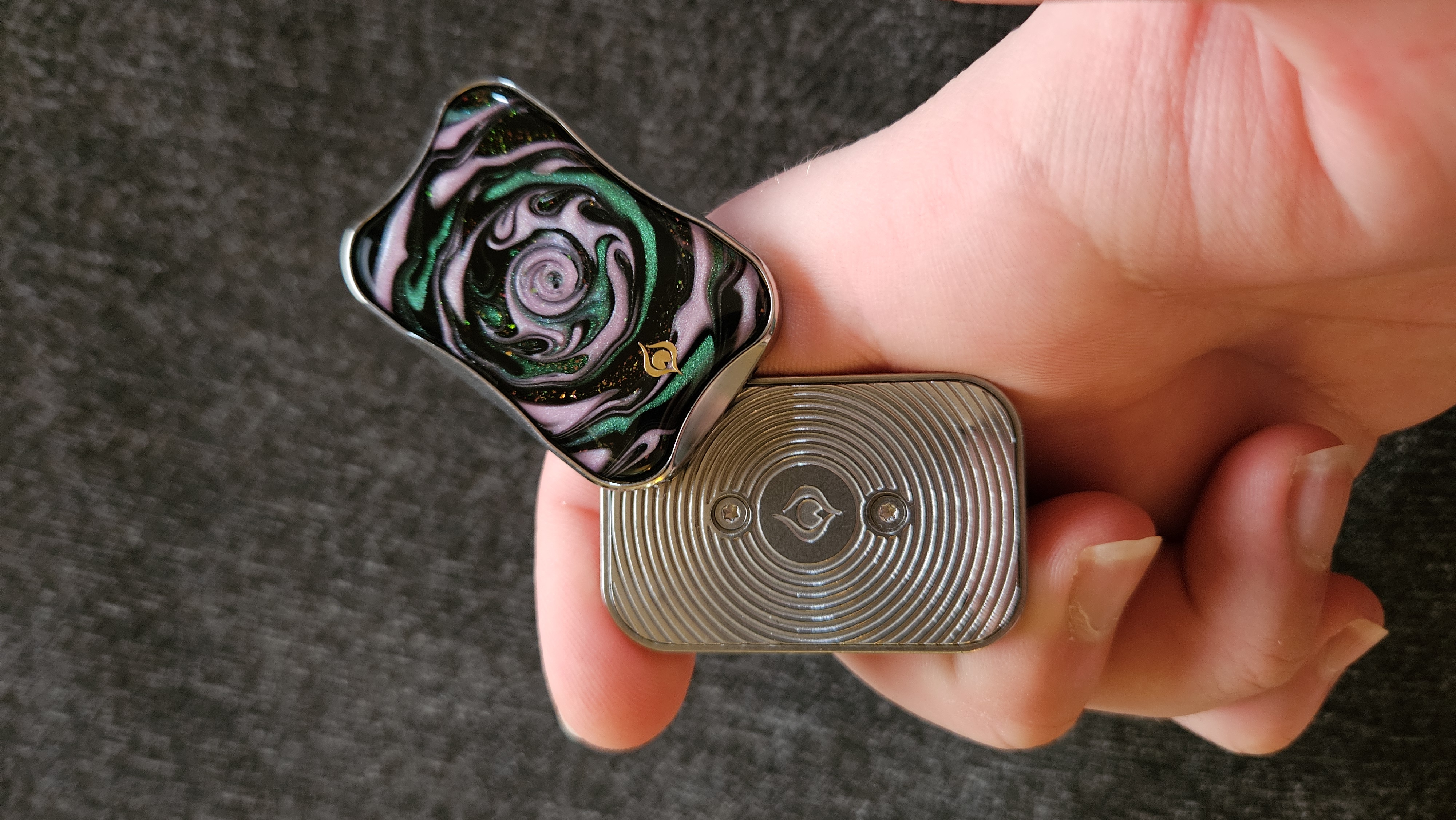
Grips and Positions
The intention of this guide is to familiarize players with some of the many grips and positions you'll use while playing. It isn't meant to be an exhaustive list - rather than trying to document every possible grip or position variant, we're just giving names to a few of the common ones, which should also help when describing moves to others.
Grips
Standard Grip
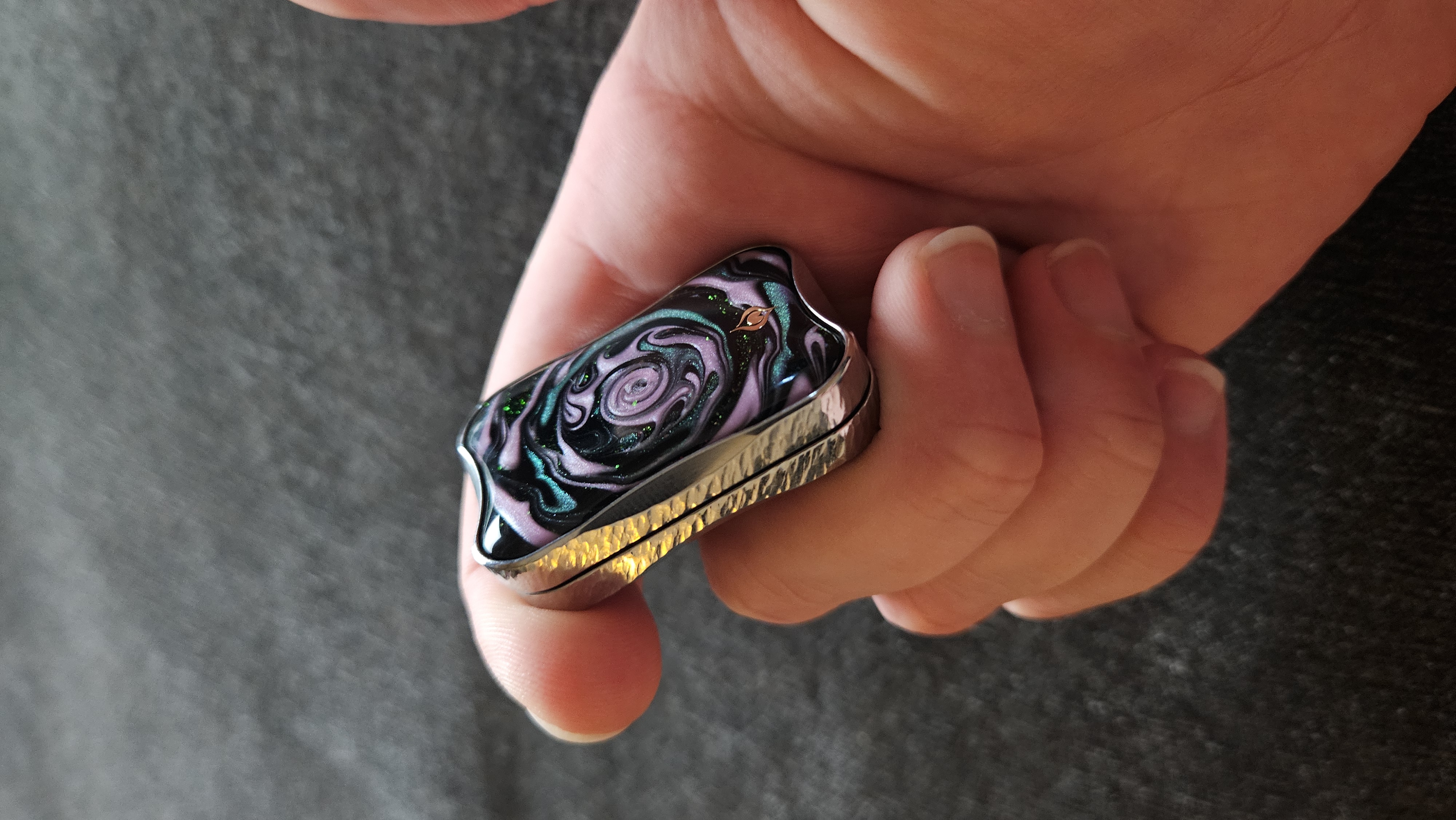
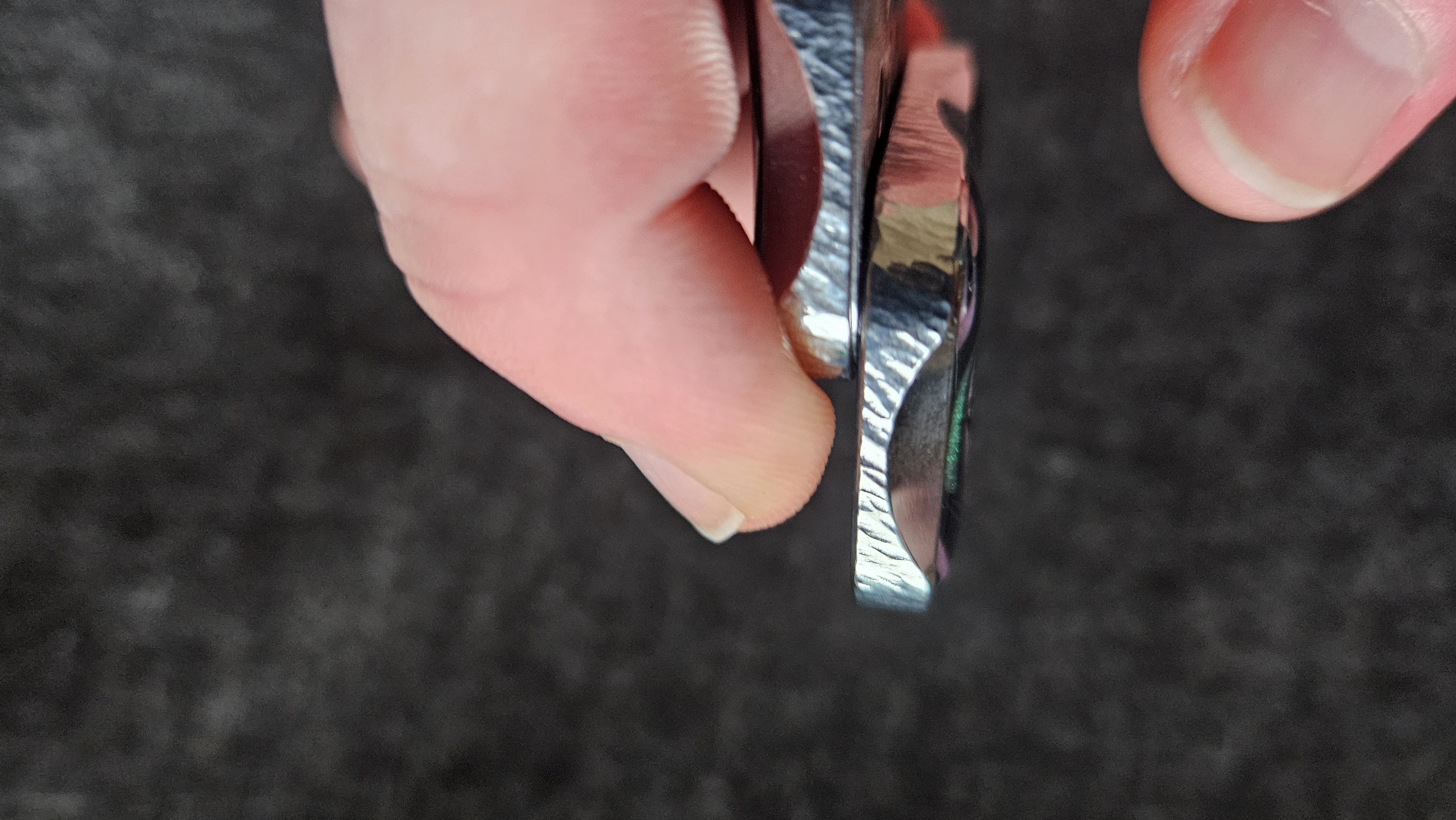
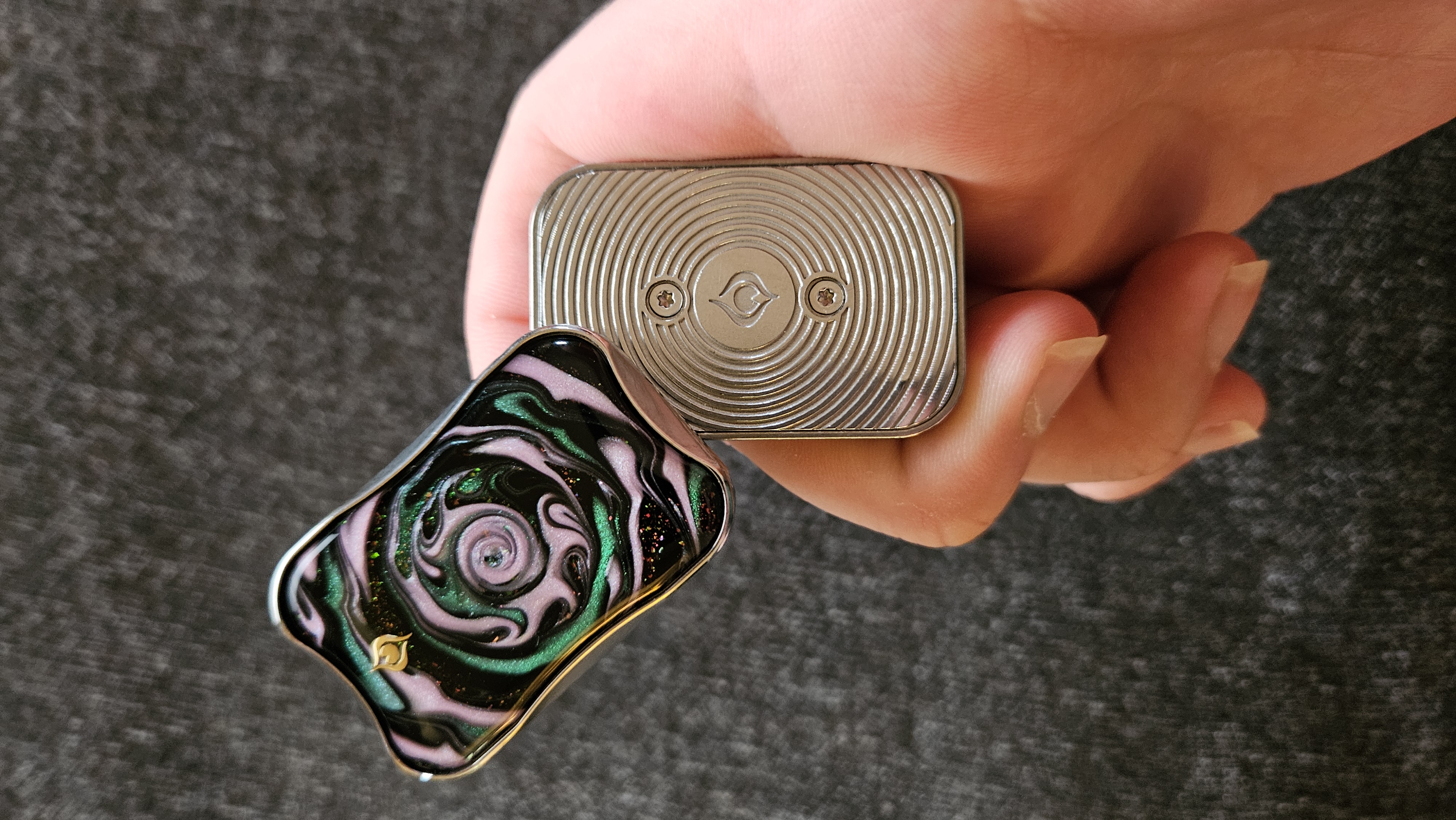
This is the foundational grip that much of fancy play is based on and is the grip you'll find yourself using most. The index finger should wrap around the two top corners of the bottom card while the middle finger supports the bottom left corner. The bottom right corner should sit near where your index finger meets your palm.
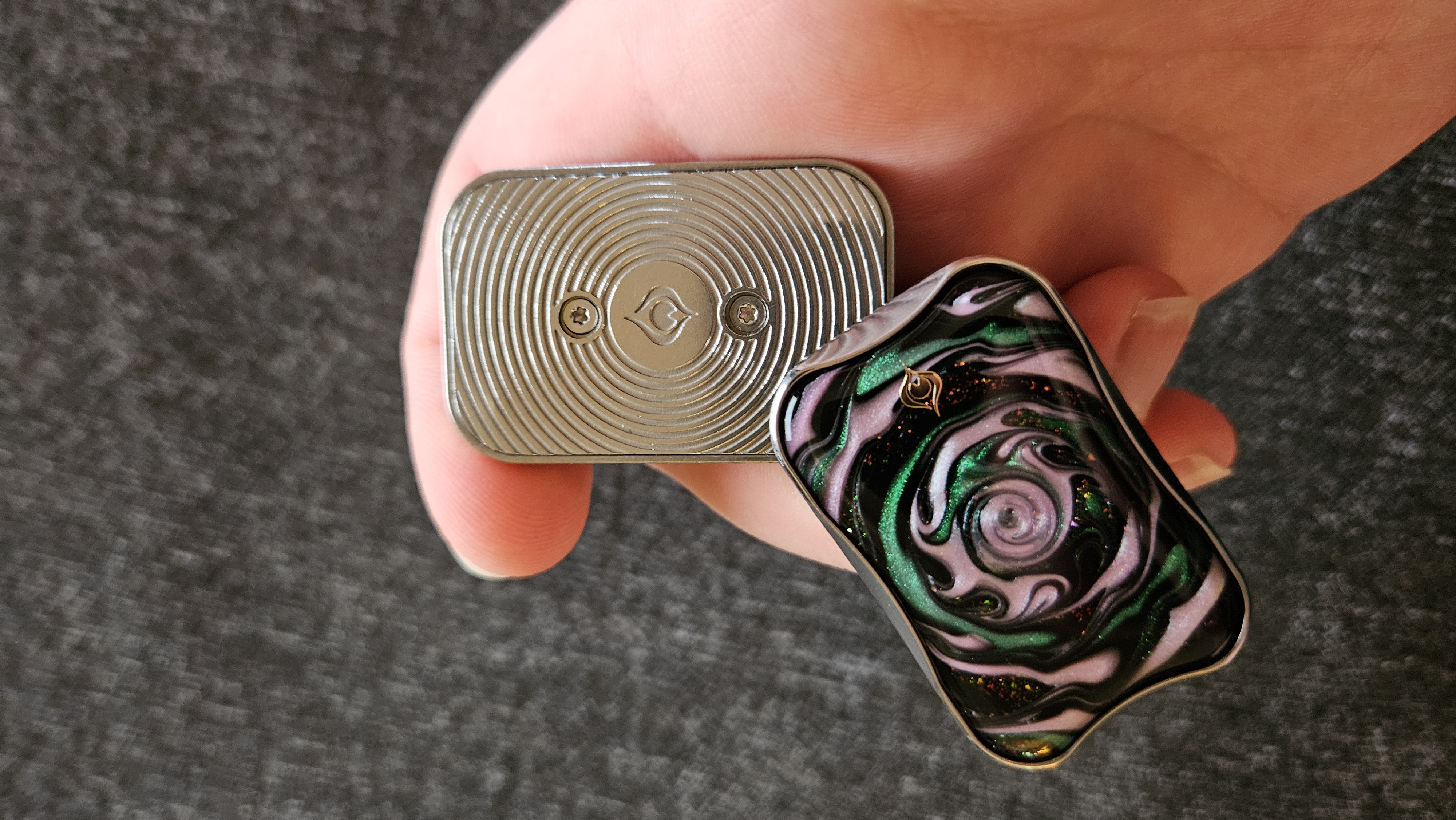
The second photo shows this grip from above. Note the very small gap between the top card and the index finger. As you're getting used to this grip, you'll have to pay attention to gaps like these to make sure you don't prevent the top card from moving.
Open Grip
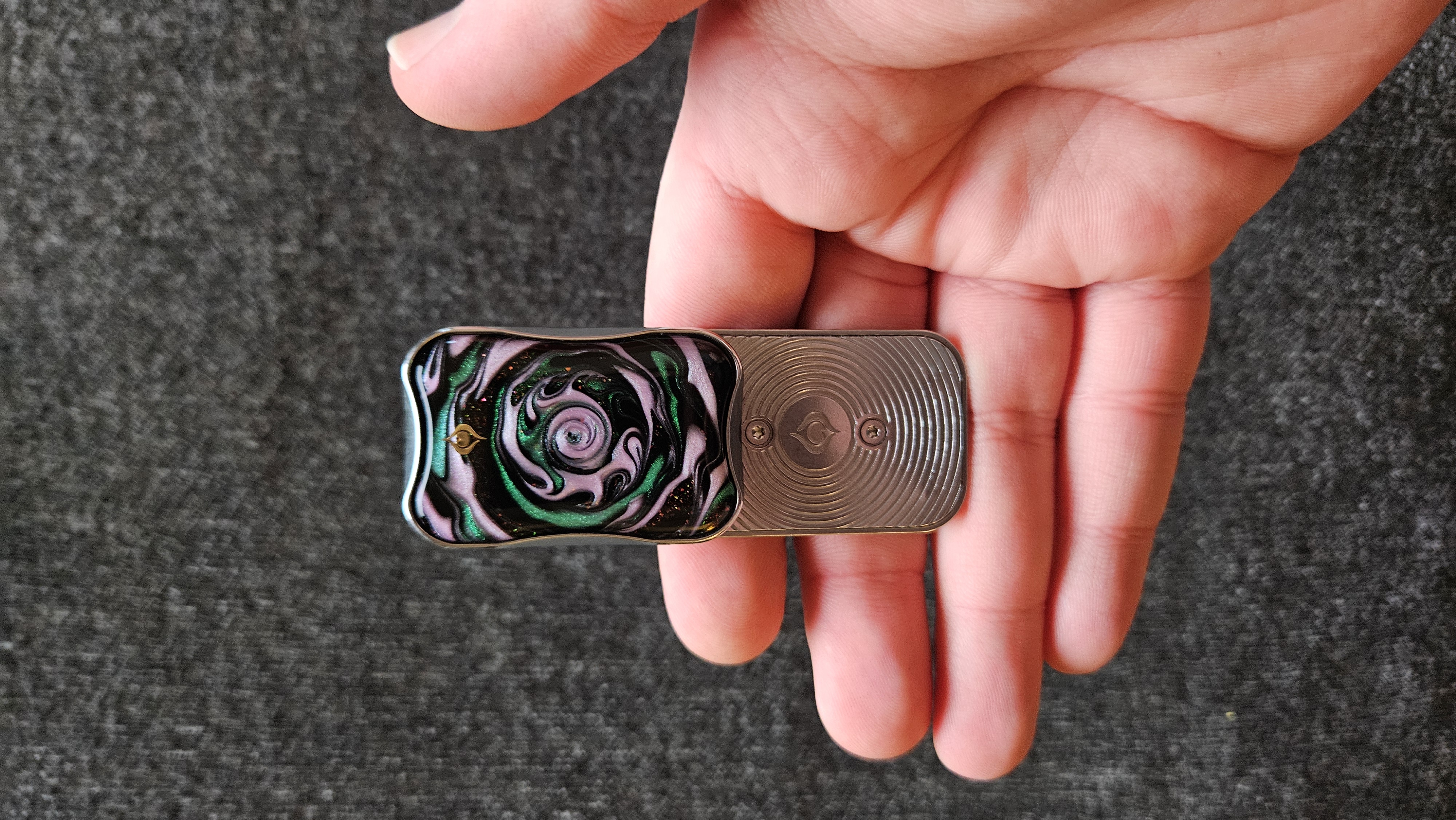
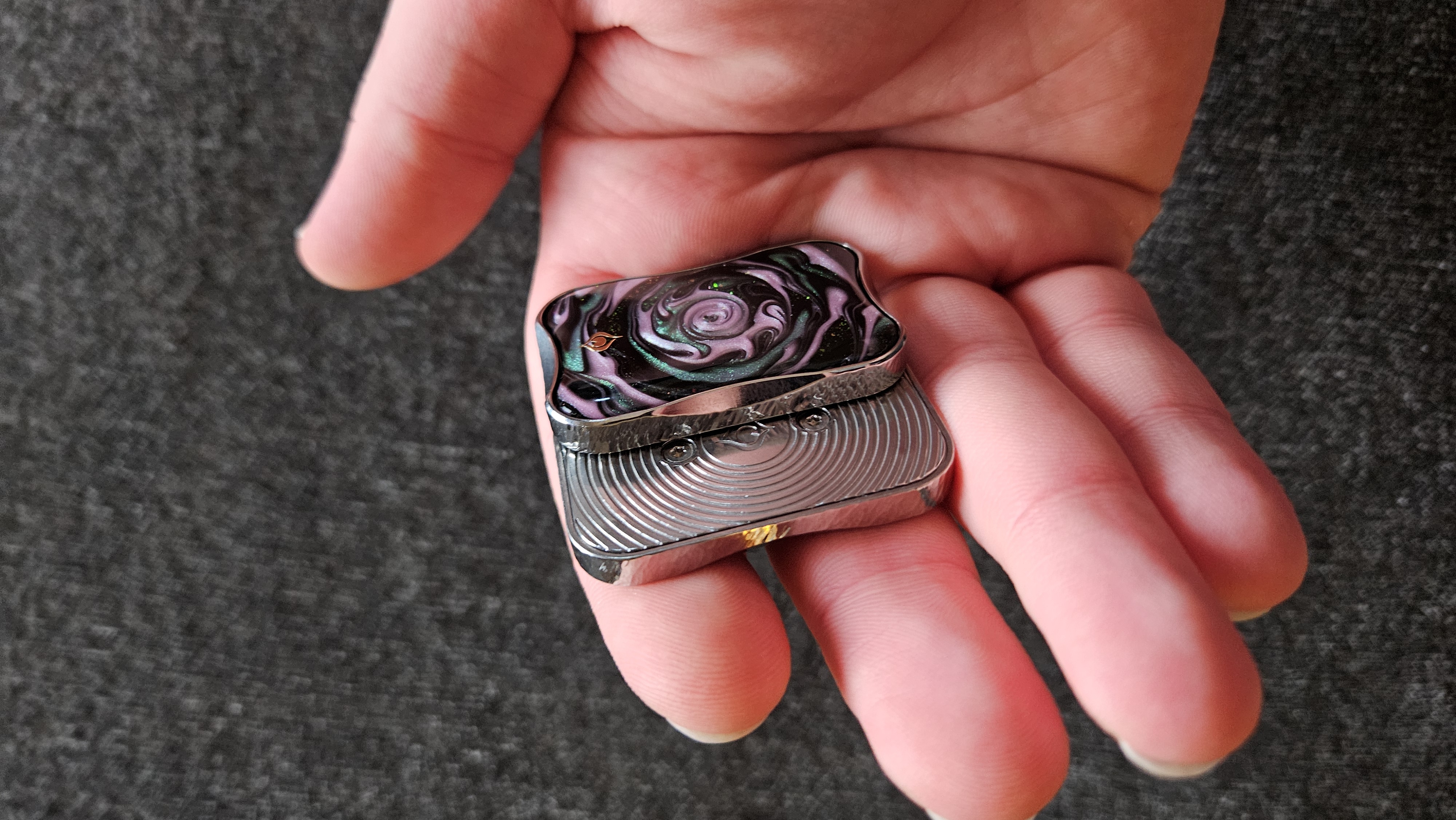
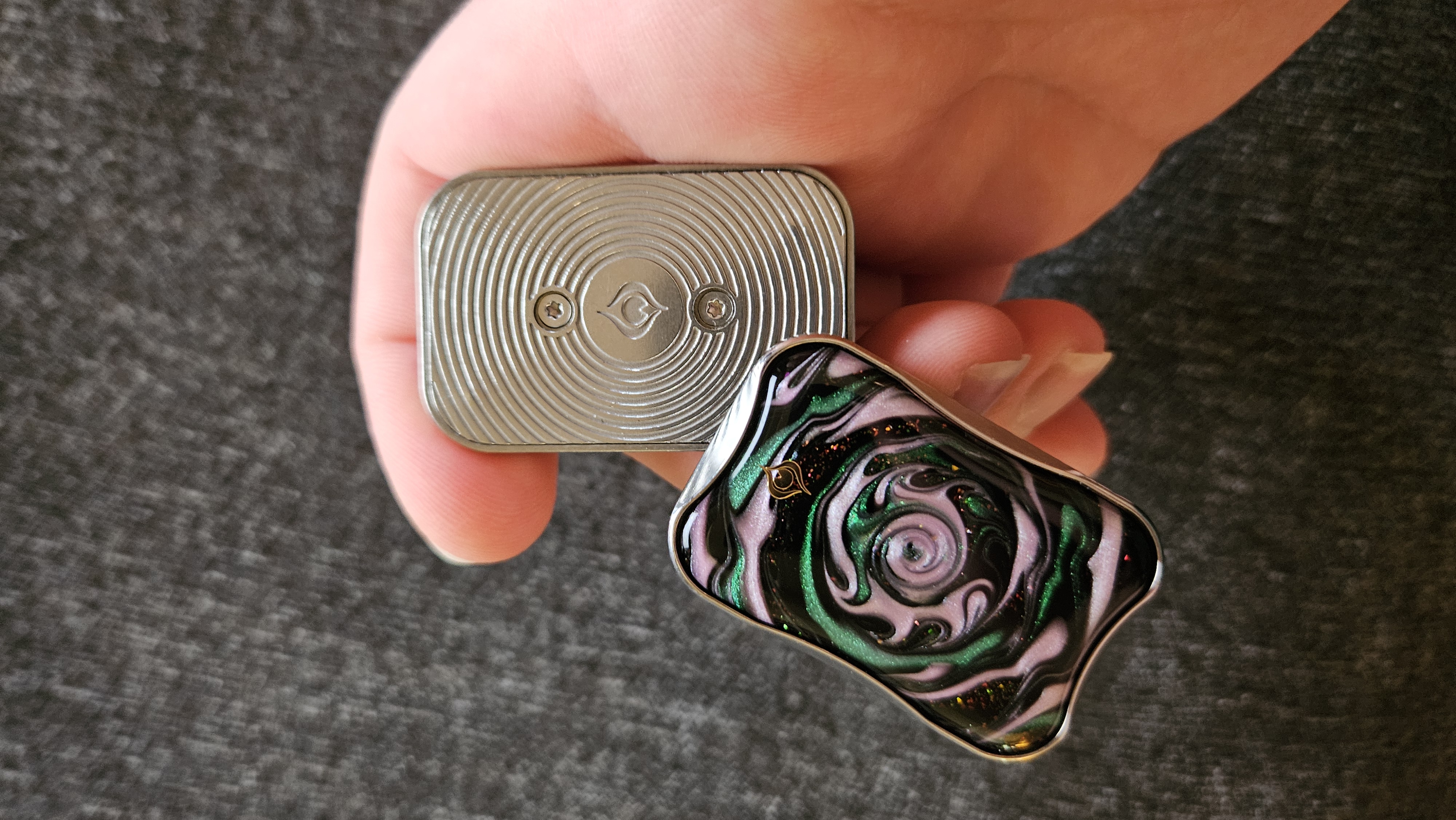
In this grip, the slider's right edge is further away from the palm, which allows for more rotational movement of the top card. This isn't a grip you'll likely stay in for too long - it's more of a transitional grip that you'll be using during certain larger movements. The ring finger (or pinkie) can be used to support the bottom card.
Pinch Grip
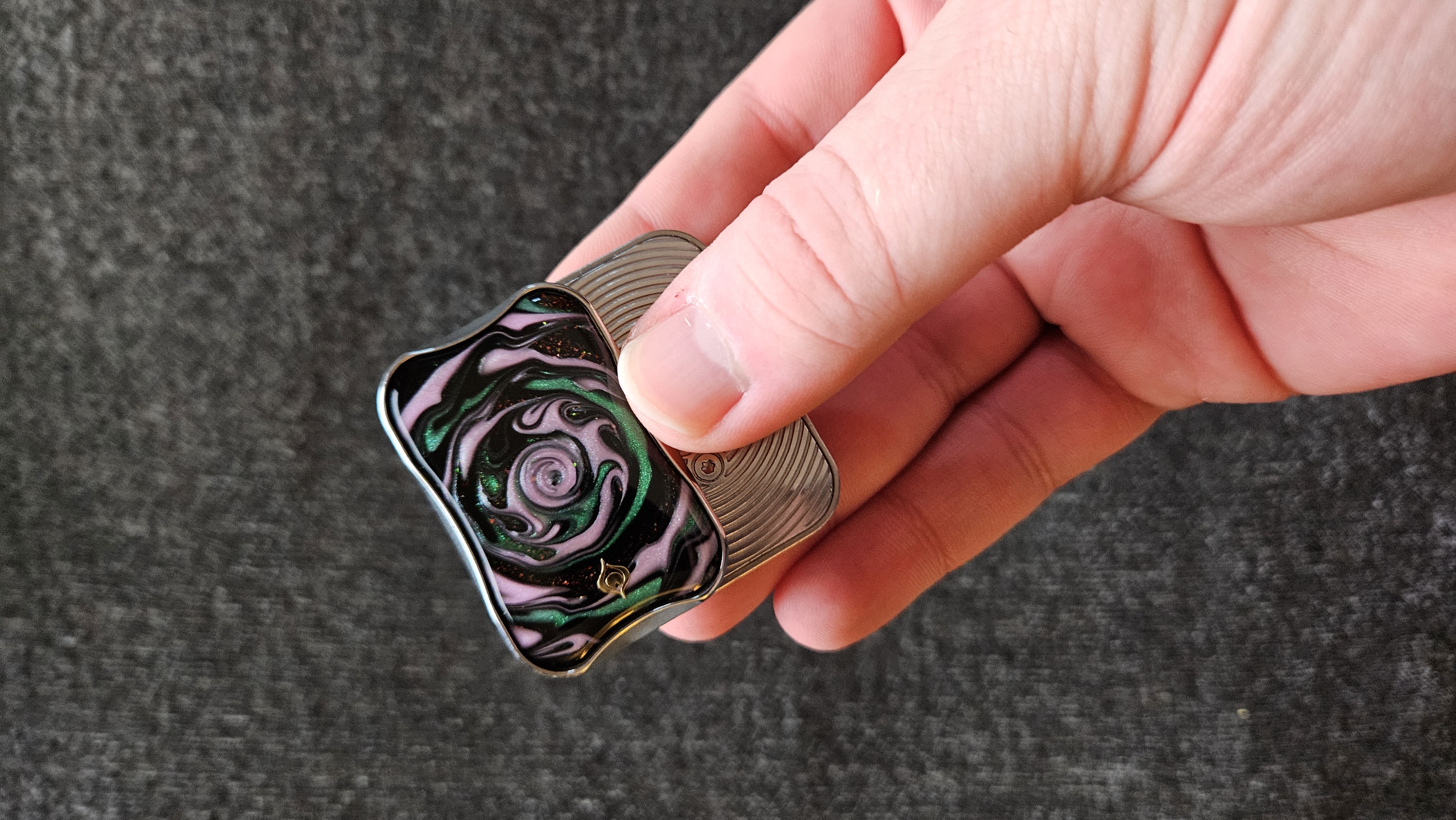
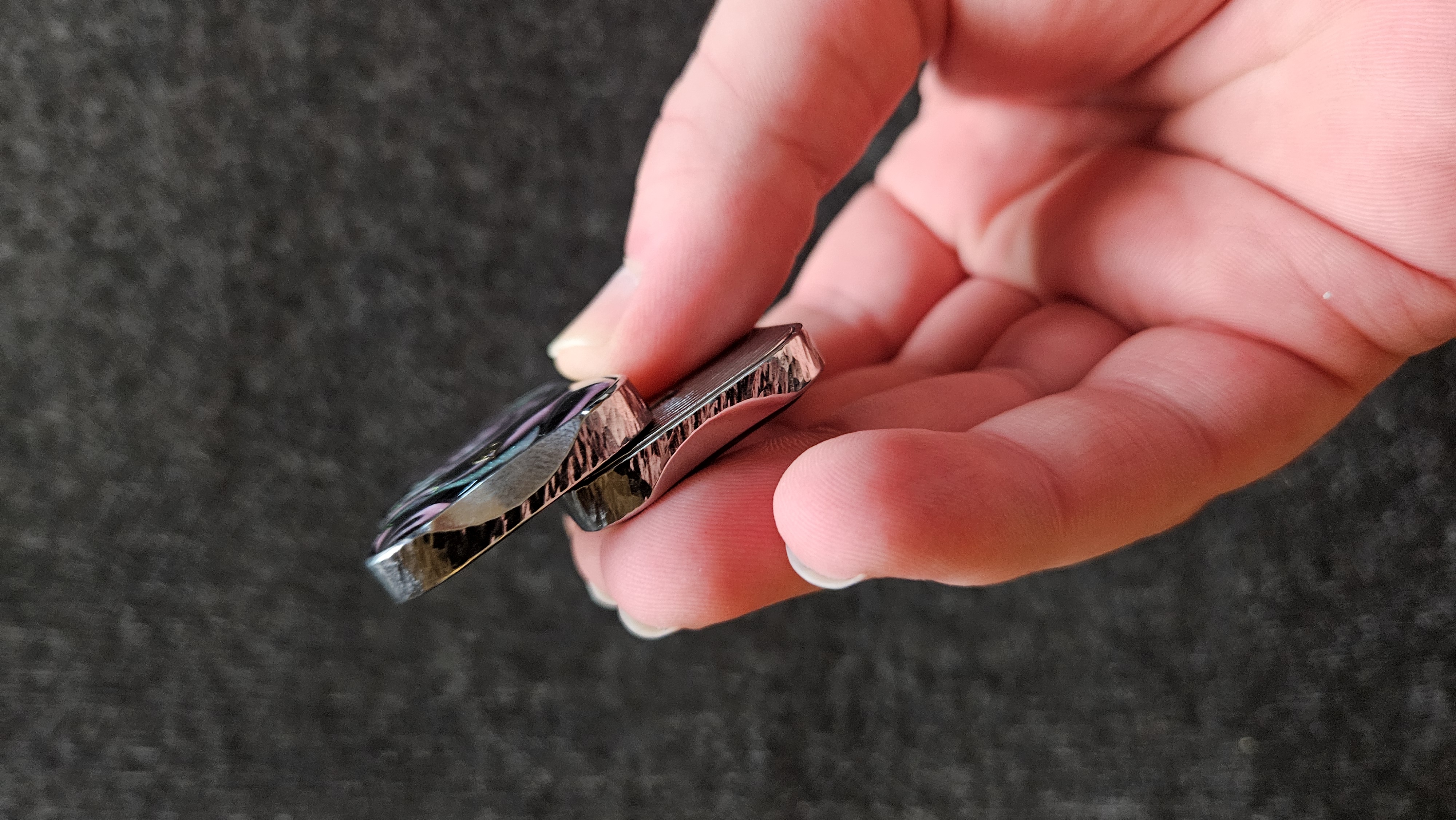
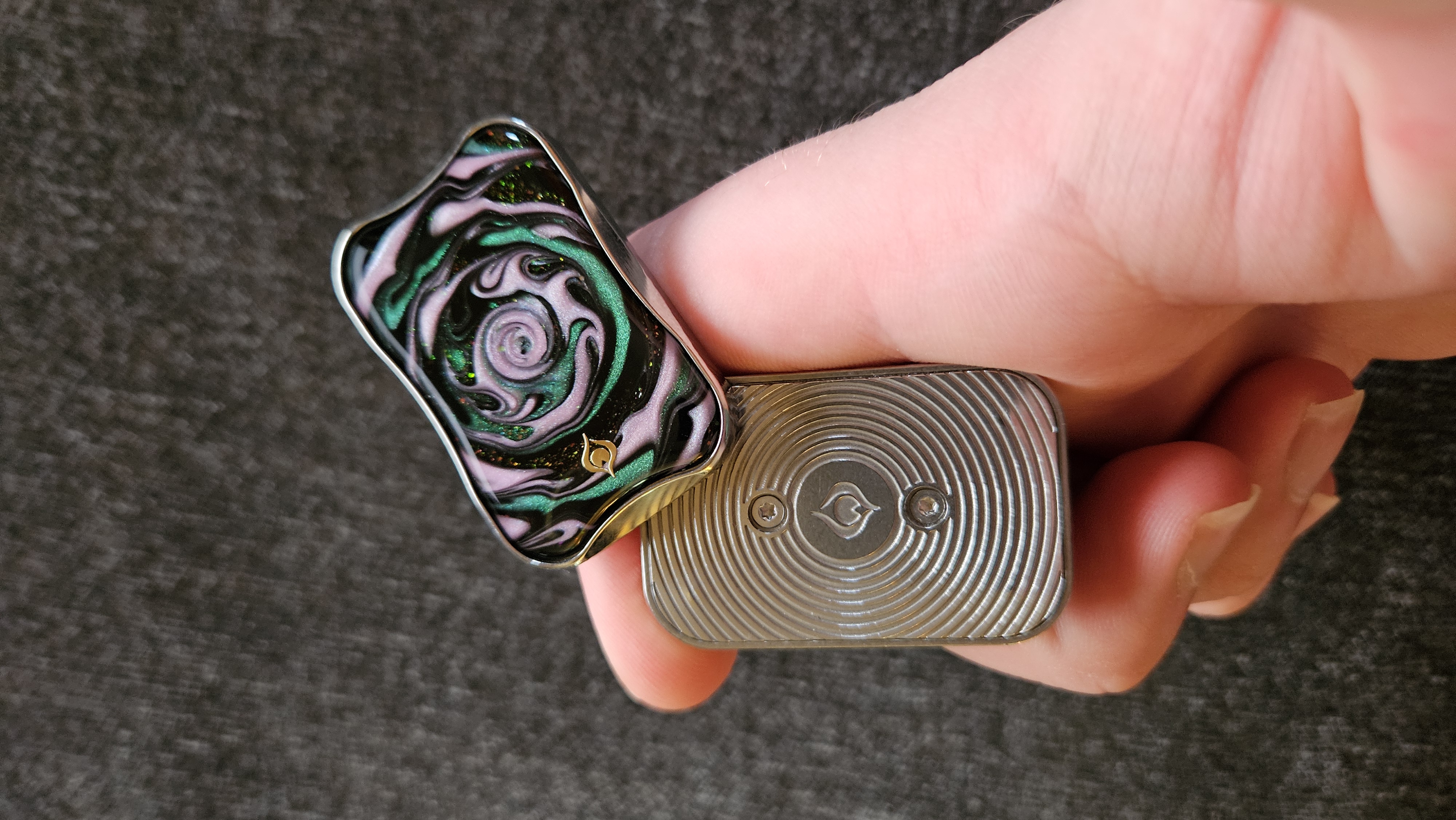
This grip allows for total freedom to rotate the top card all the way around the bottom card. The slider's long edges should be perpendicular to your fingers and thumb. Your thumb should press down on the bottom card, while your fingers (index, middle, and optionally ring) support its underside.
Positions
Positions are divided into resting positions, which are stable positions the slider will stay in until at least one magnetic connection is broken, and hinges, which are transitional positions that allow the cards to pivot freely around a single connected corner.
Resting Positions
Basic
These all have at least two corner-to-corner connections, making them the most stable of all the resting positions.
Closed
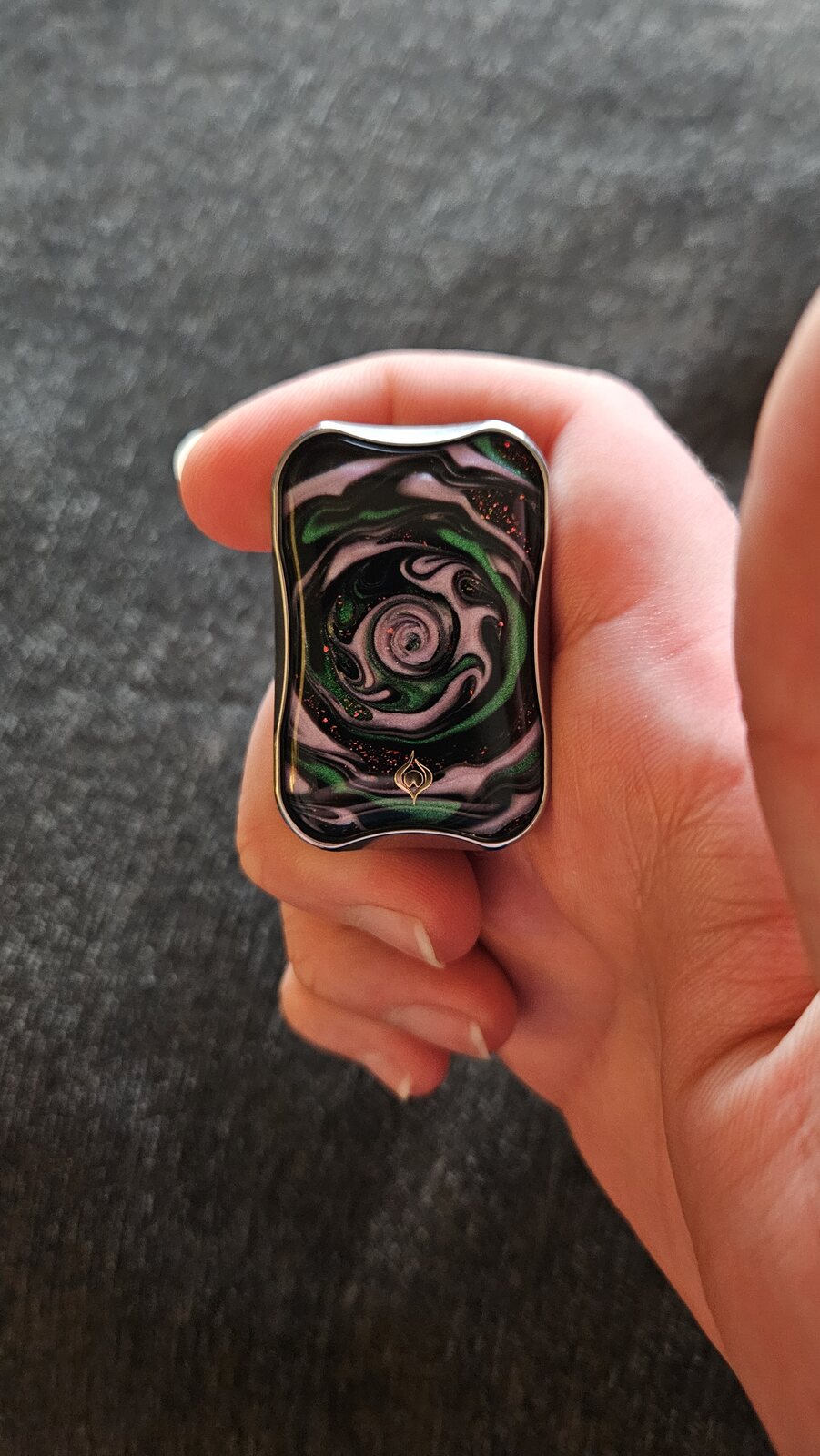
The two cards are fully aligned.
Standard Open
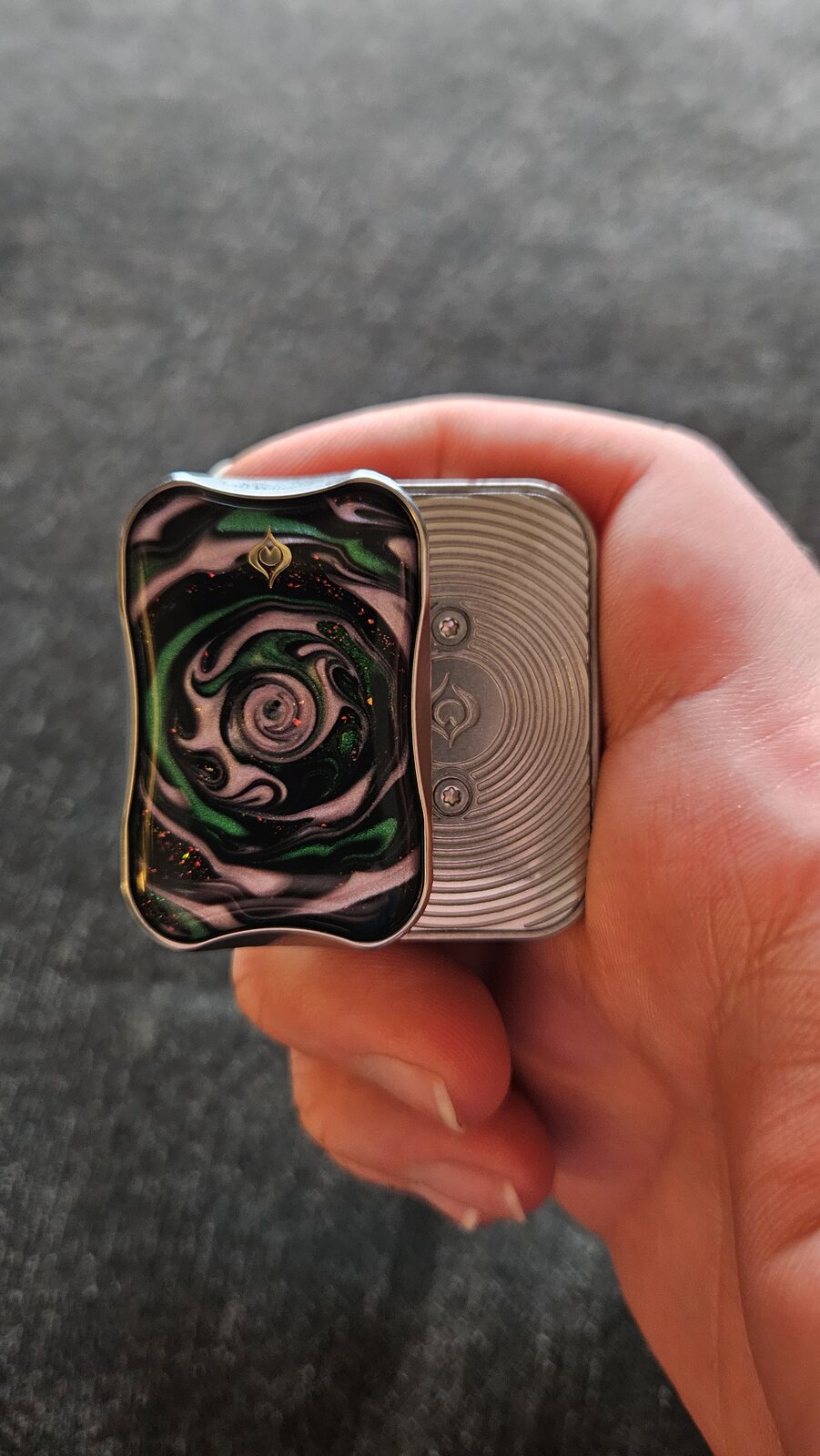
The right edge of the top card is attached to the left edge of the bottom card.
Top Open
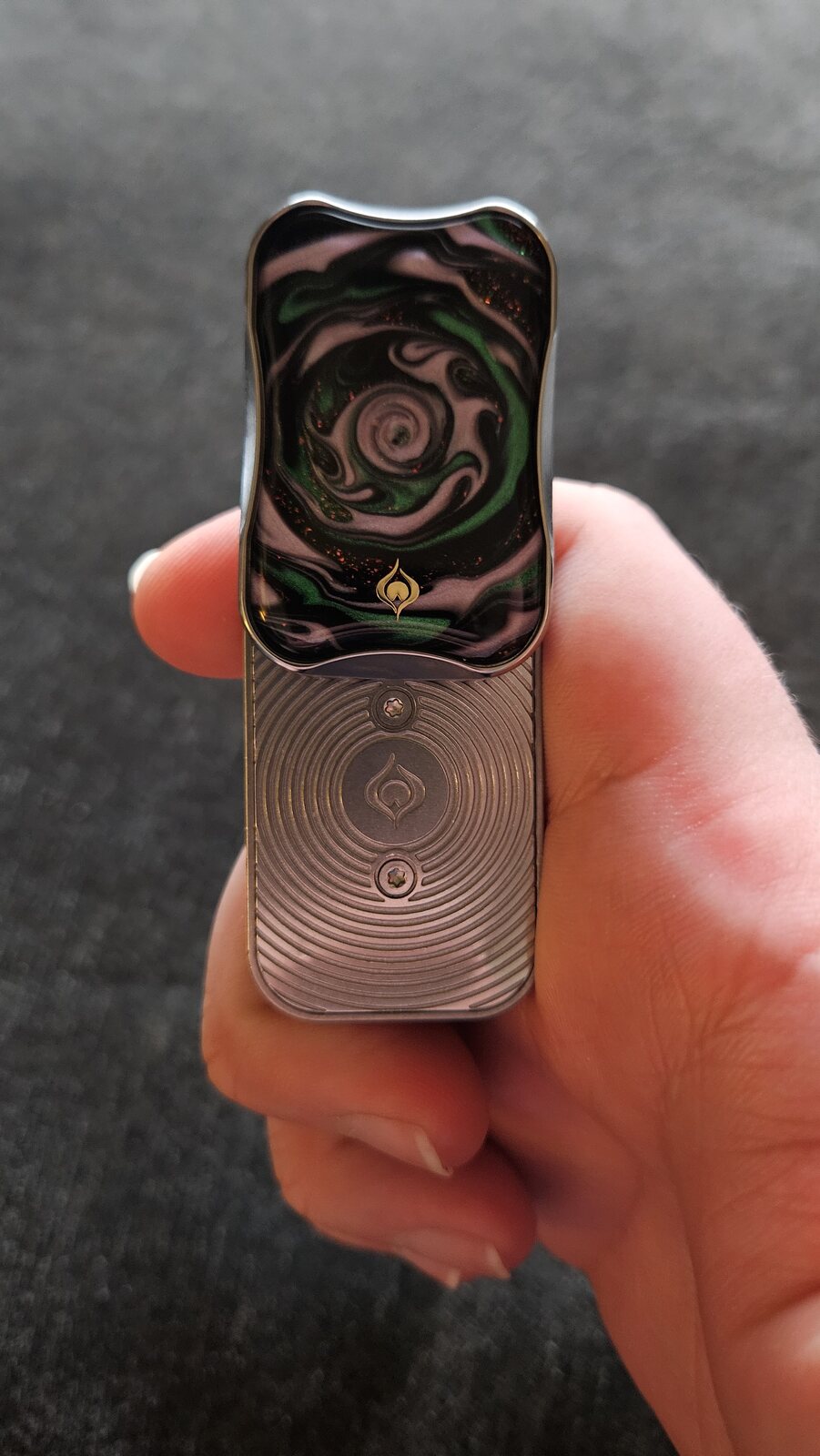
The bottom edge of the top card is attached to the top edge of the bottom card.
Bottom Open
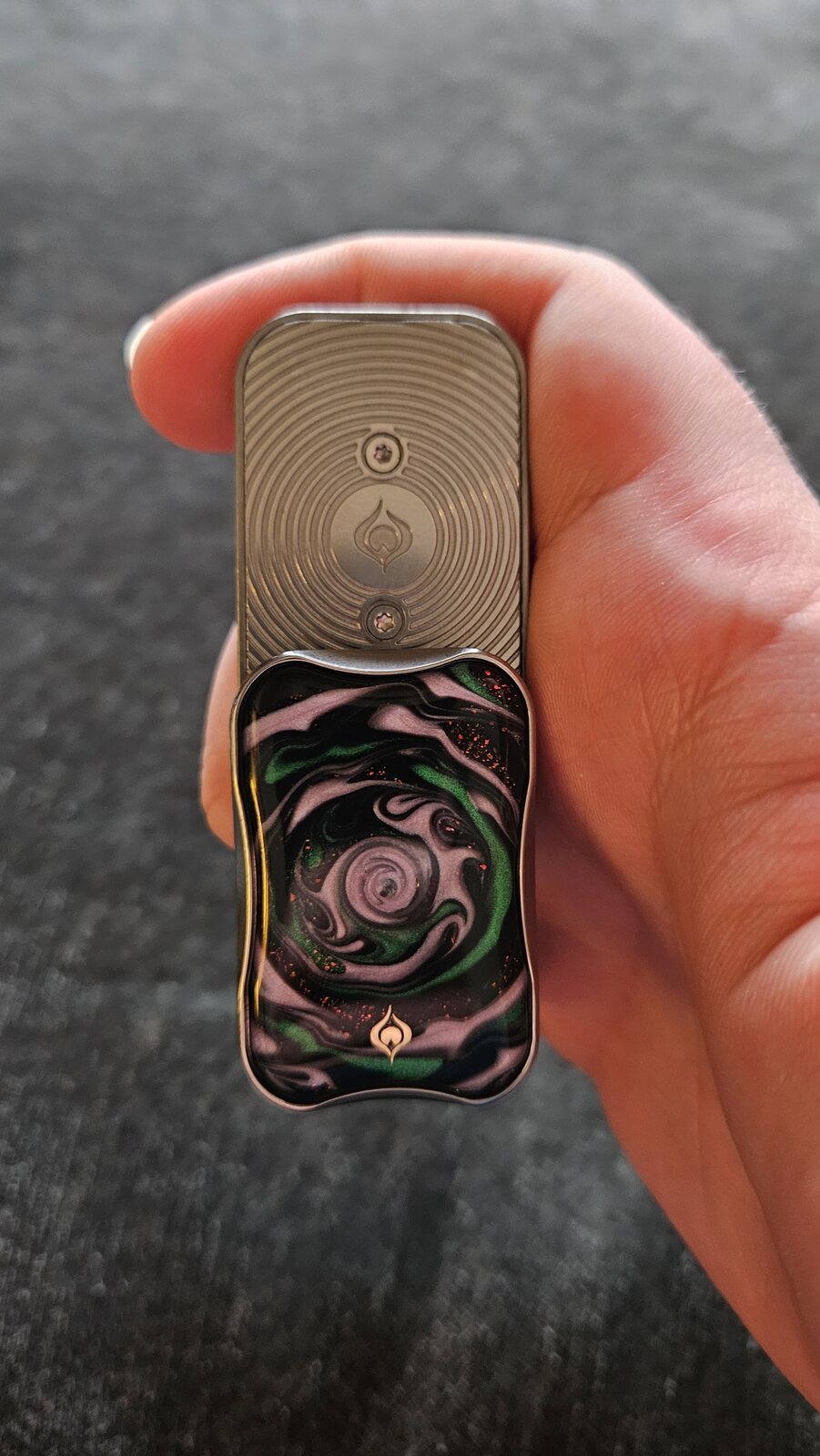
The top edge of the top card is attached to the bottom edge of the bottom card.
Wiggles
These positions are relatively unstable compared to other resting positions due to their lack of a corner-to-corner connection. If you gently shake the bottom card back and forth, the top card will wiggle in response. A slight push or flick will easily cause the slider to leave this position, most often leading into standard open or a hinge.
Upper Wiggle
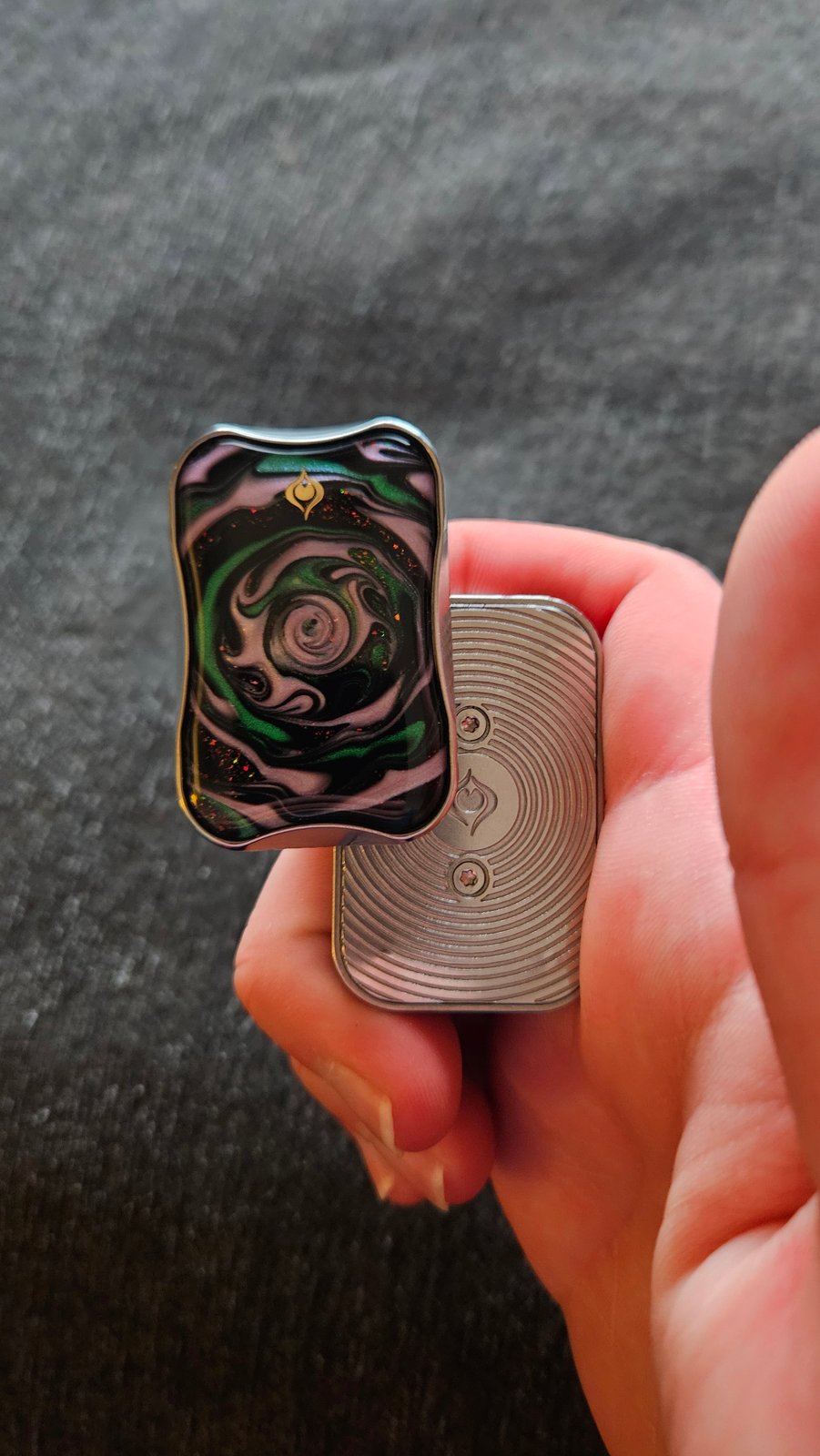
The bottom half of the top card's right edge is attached to the top half of the bottom card's left edge.
Lower Wiggle
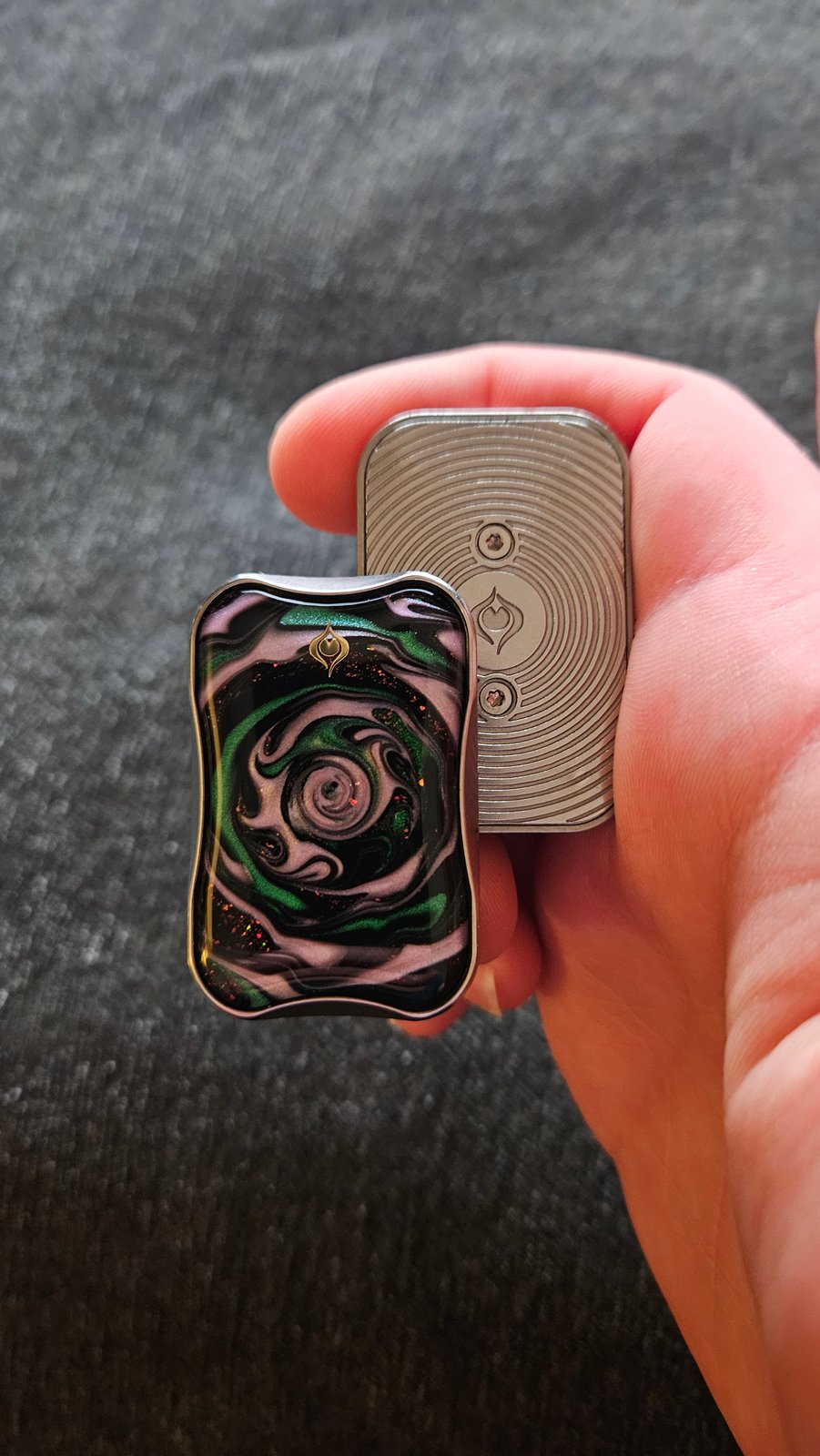
The top half of the top card's right edge is attached to the bottom half of the bottom card's left edge.
Wings and Caps
In wings and caps, the top card lies perpendicular to the bottom card. Excluding tight caps, they have one corner-to-corner magnetic connection and one corner-to-center connection, making them quite versatile depending on where you choose to push from.
Wings
These get their name from one of fancy play's quintessential moves: the butterfly.
Upper Wing
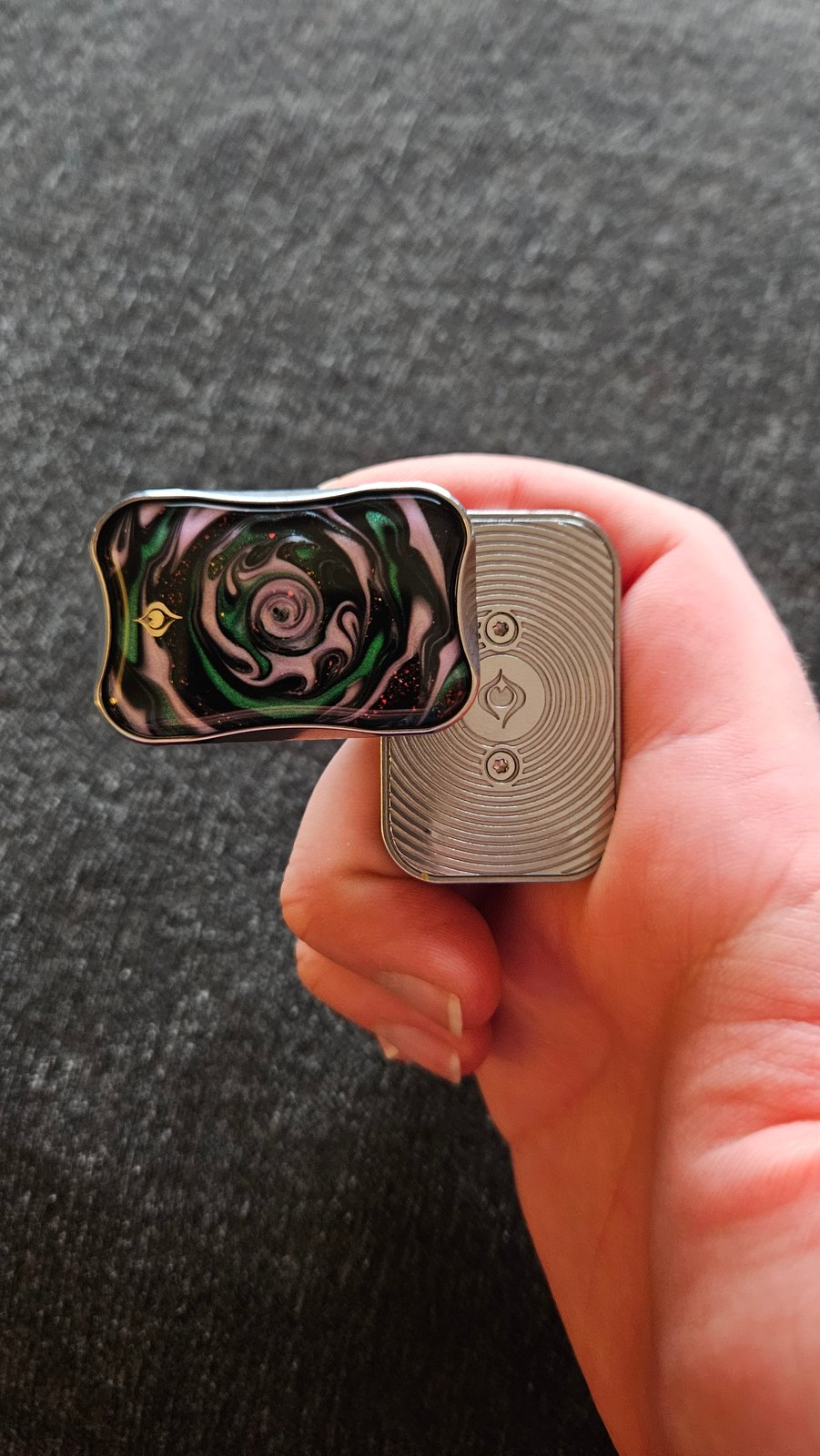
The top card's right edge is attached to the top half of the bottom card's left edge.
Lower Wing
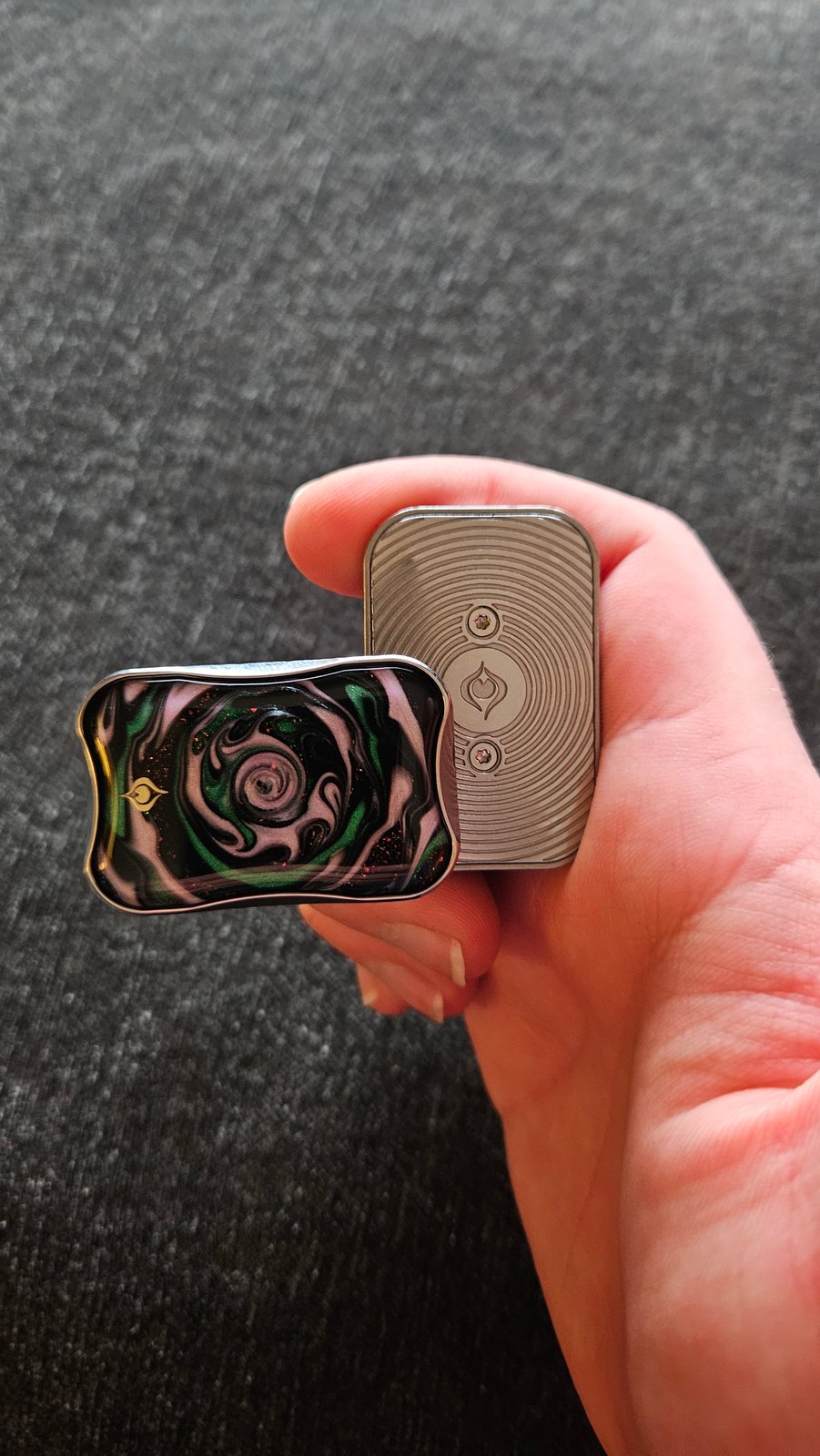
The top card's right edge is attached to the bottom half of the bottom card's left edge.
Caps
These positions are named after their shape, which is reminiscent of a cap (the top card) worn on one's head (the top of the bottom card).
Cap
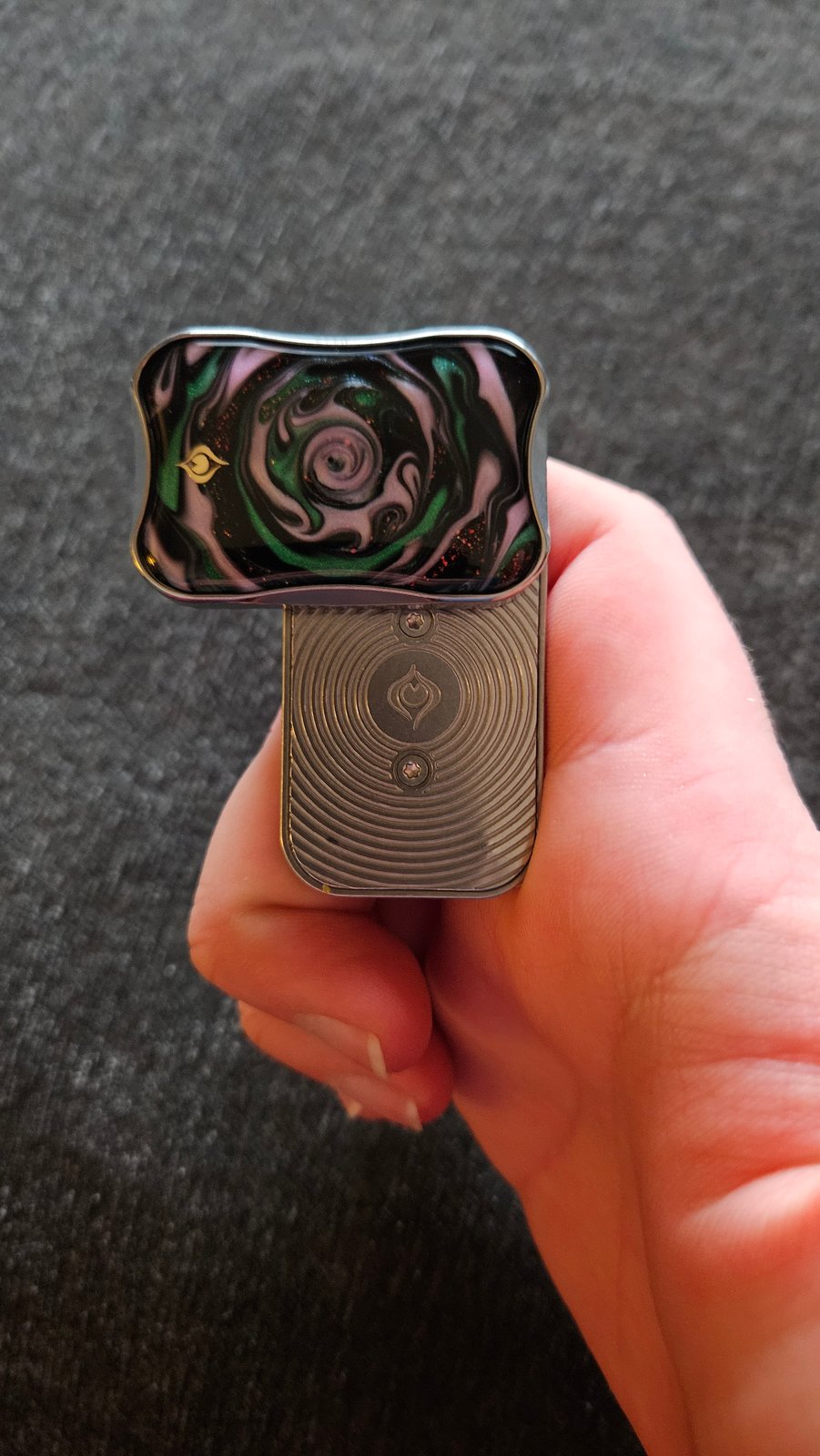
The right half of the top card's bottom edge is attached to the top edge of the bottom card.
Backwards Cap
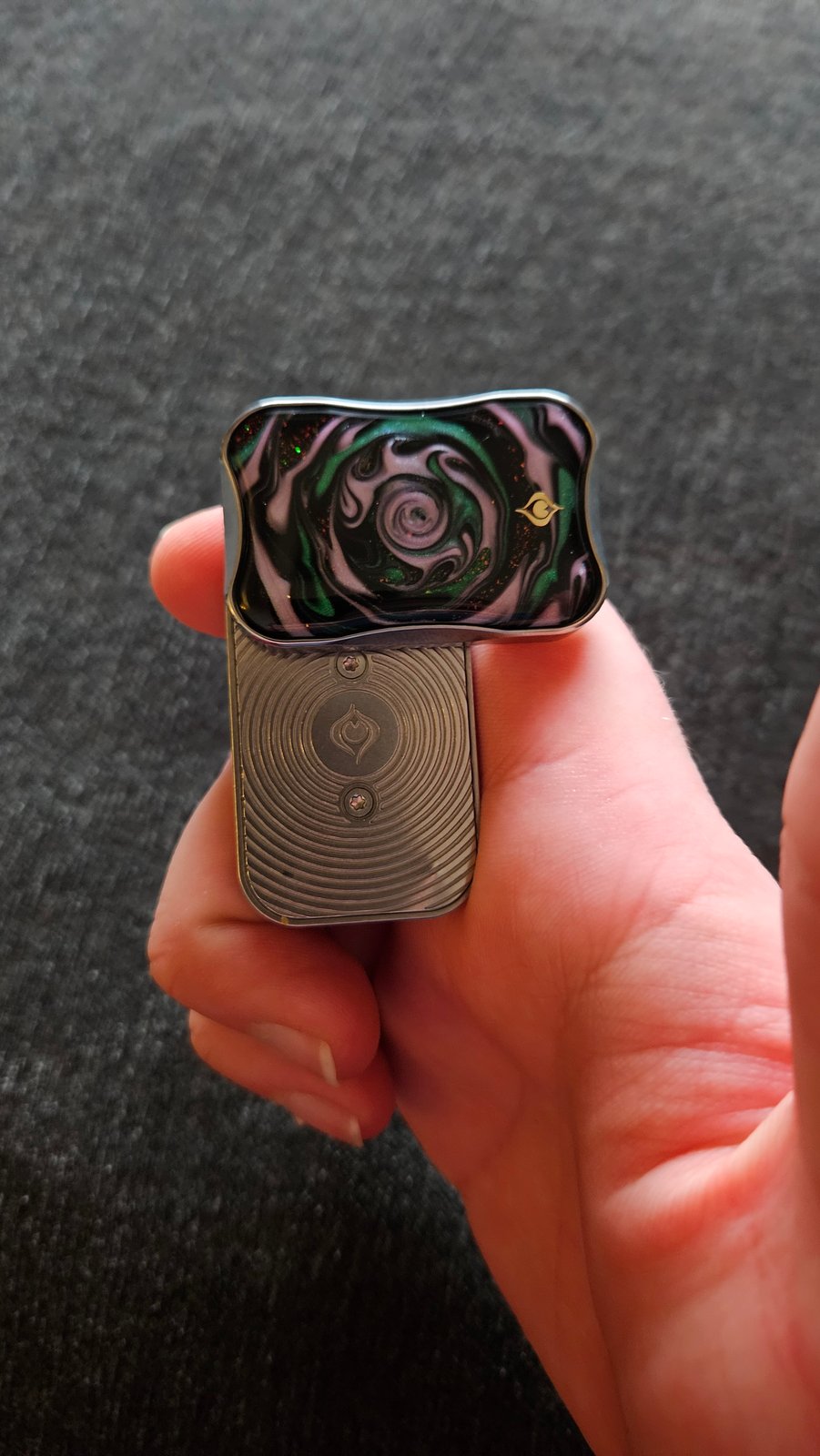
The left half of the top card's bottom edge is attached to the top edge of the bottom card.
Tight Cap
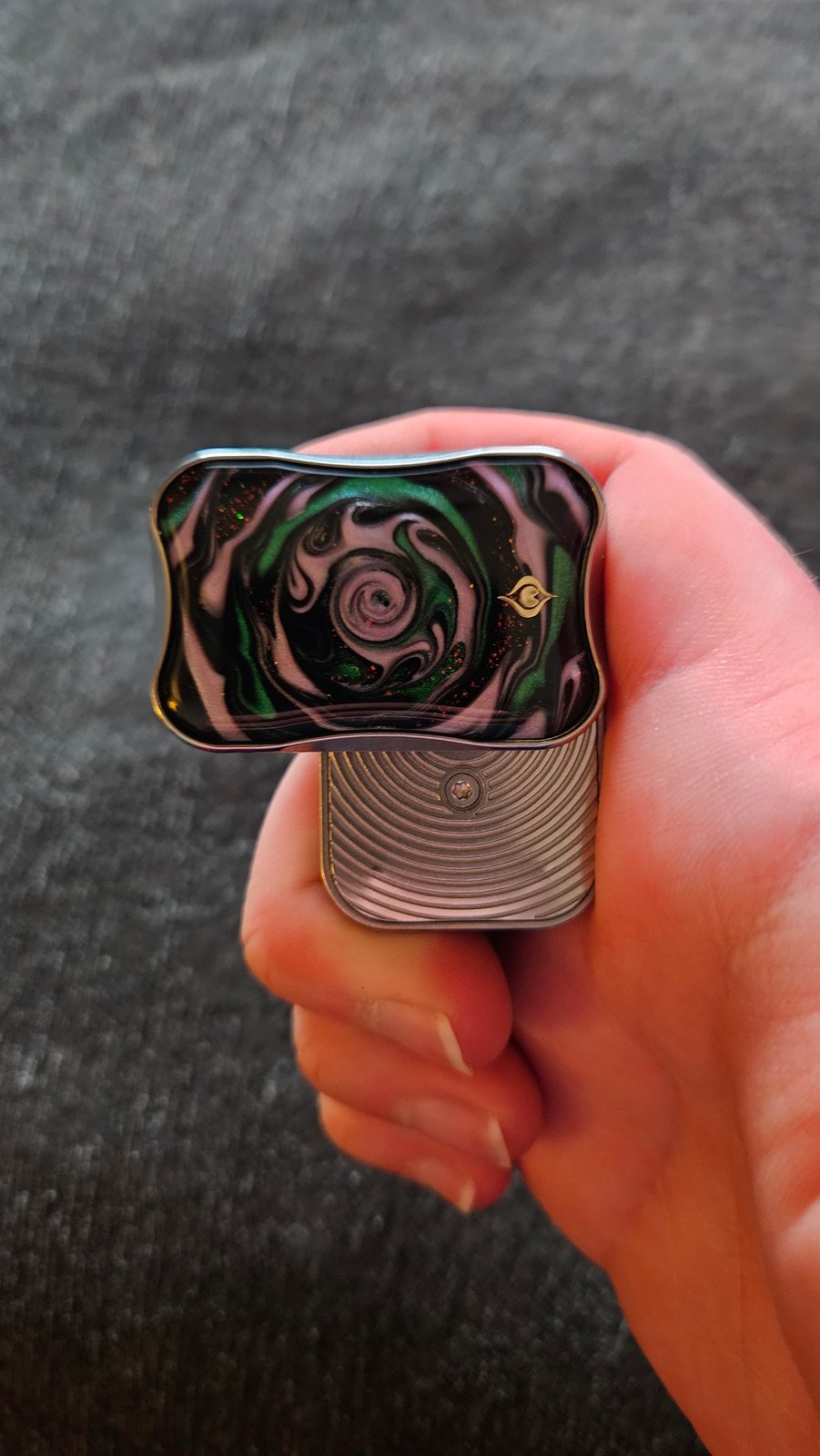
Same as Cap, but the top edge of the top card is connected to the top edge of the bottom card.
Tight Backwards Cap
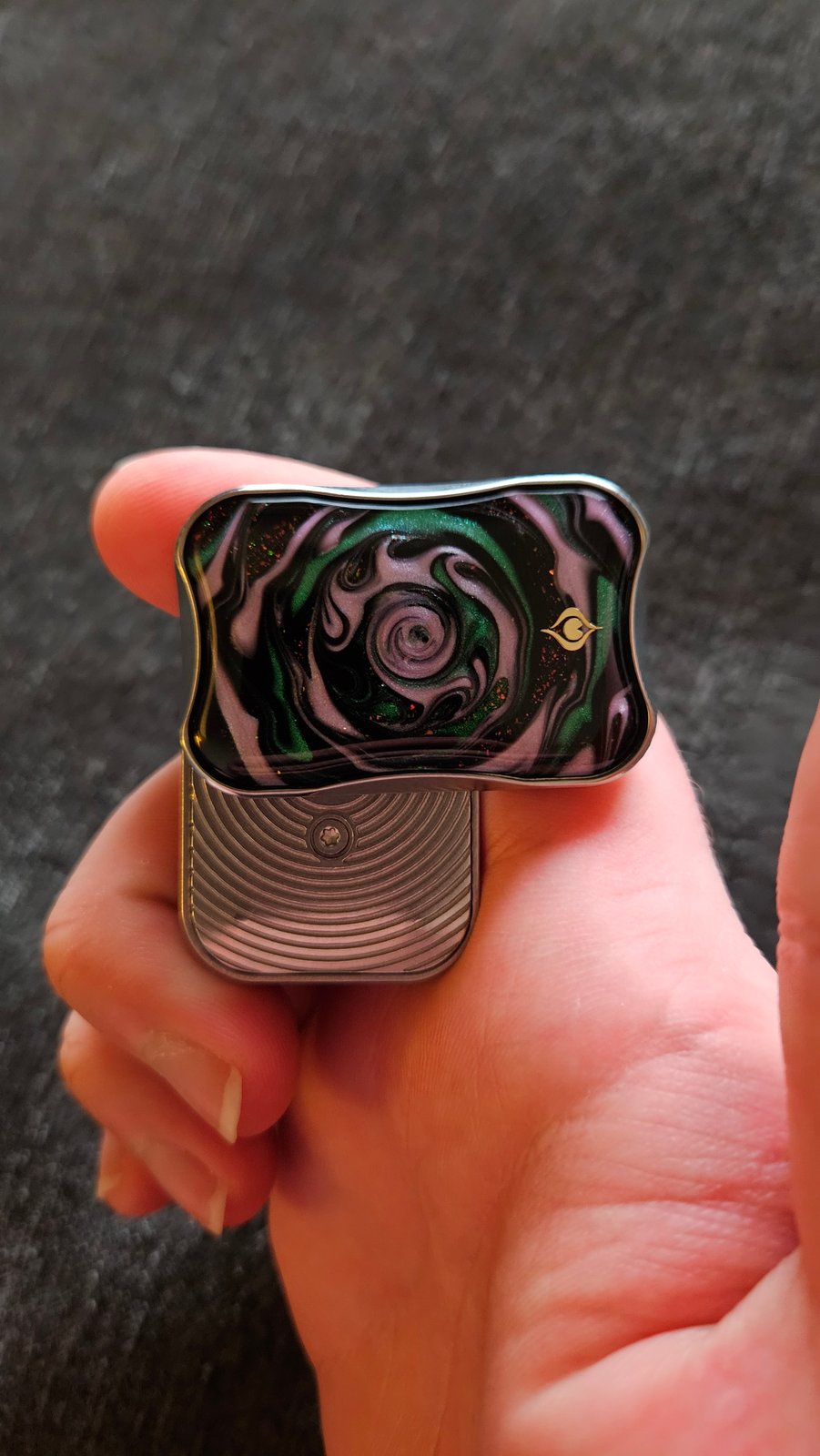
Same as Backwards Cap, but the top edge of the top card is connected to the top edge of the bottom card.
Hinges
Hinges are named after the pivoting motion that occurs when the two cards are only connected by one corner. “Parallel” and “Perpendicular” refer to the alignment of the cards at either end of the hinge, depending on which corner of the top card is connected.
Top Left Hinge (Parallel)
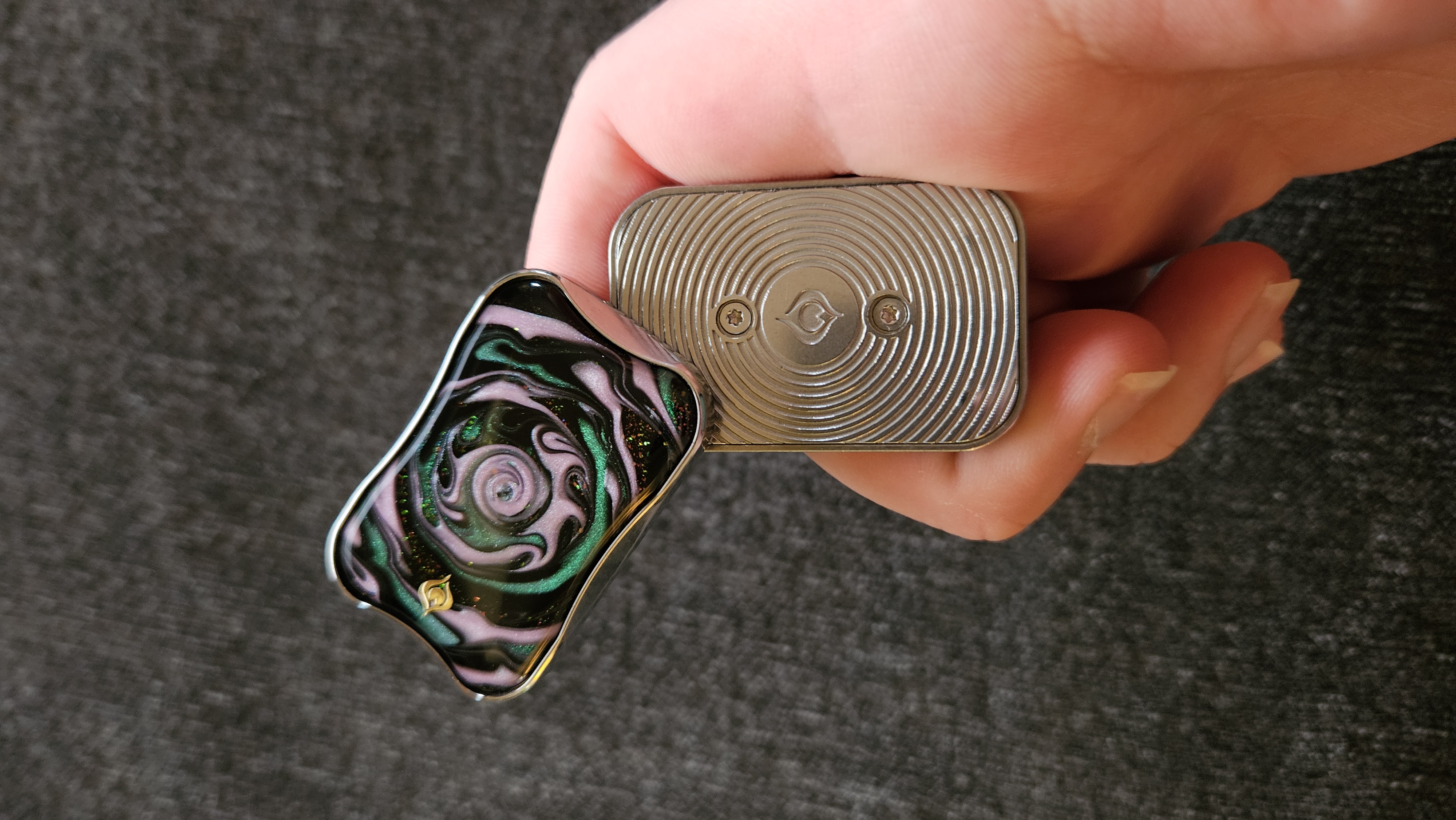
Top Left Hinge (Perpendicular)
Bottom Left Hinge (Parallel)
Bottom Left Hinge (Perpendicular)
Top Right Hinge (Parallel)
Top Right Hinge (Perpendicular)